
WELCOME TO OUR SITE
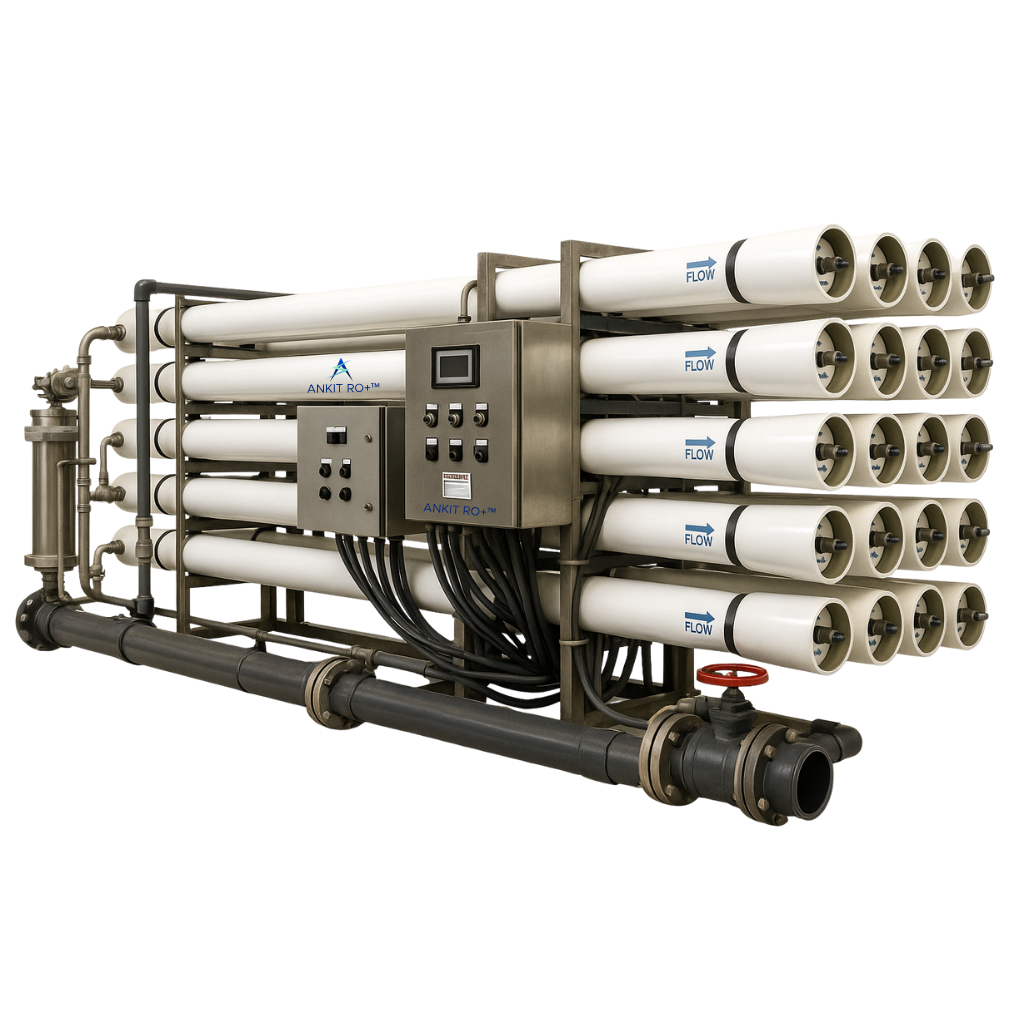
Desalination is a separation process used to reduce the dissolved salt content of saline water to a usable level. The SVJPL Seawater Desalination Plant uses a process called reverse osmosis (RO) to produce drinking water from seawater.
Seawater entering the plant undergoes a rigorous pretreatment process, after which freshwater is separated from seawater using reverse osmosis. The end product is high-quality drinking water.
High pressure forces the pretreated water through semi-permeable membranes to separate the freshwater, leaving concentrated (twice-as-salty) seawater and other minerals behind.
RO plants have a very high space-to-production capacity ratio, ranging from 25,000 to 60,000 L/day/m².
Contact us for pricing, customization & detailed technical proposal.
Send EnquiryWe maintain the highest standards to ensure safety, quality, and compliance.
Ensuring quality systems across
design, manufacturing, and service processes.

Trusted and verified vendor
on the Government e-Marketplace (GeM).

All our RO, ETP, and STP Plants
adhere to Pollution Control Board guidelines.